In the Atlas Mountains of Morocco, alongside one of Africa's oldest migrations
Each journey is built around people whose knowledge continues to be practiced
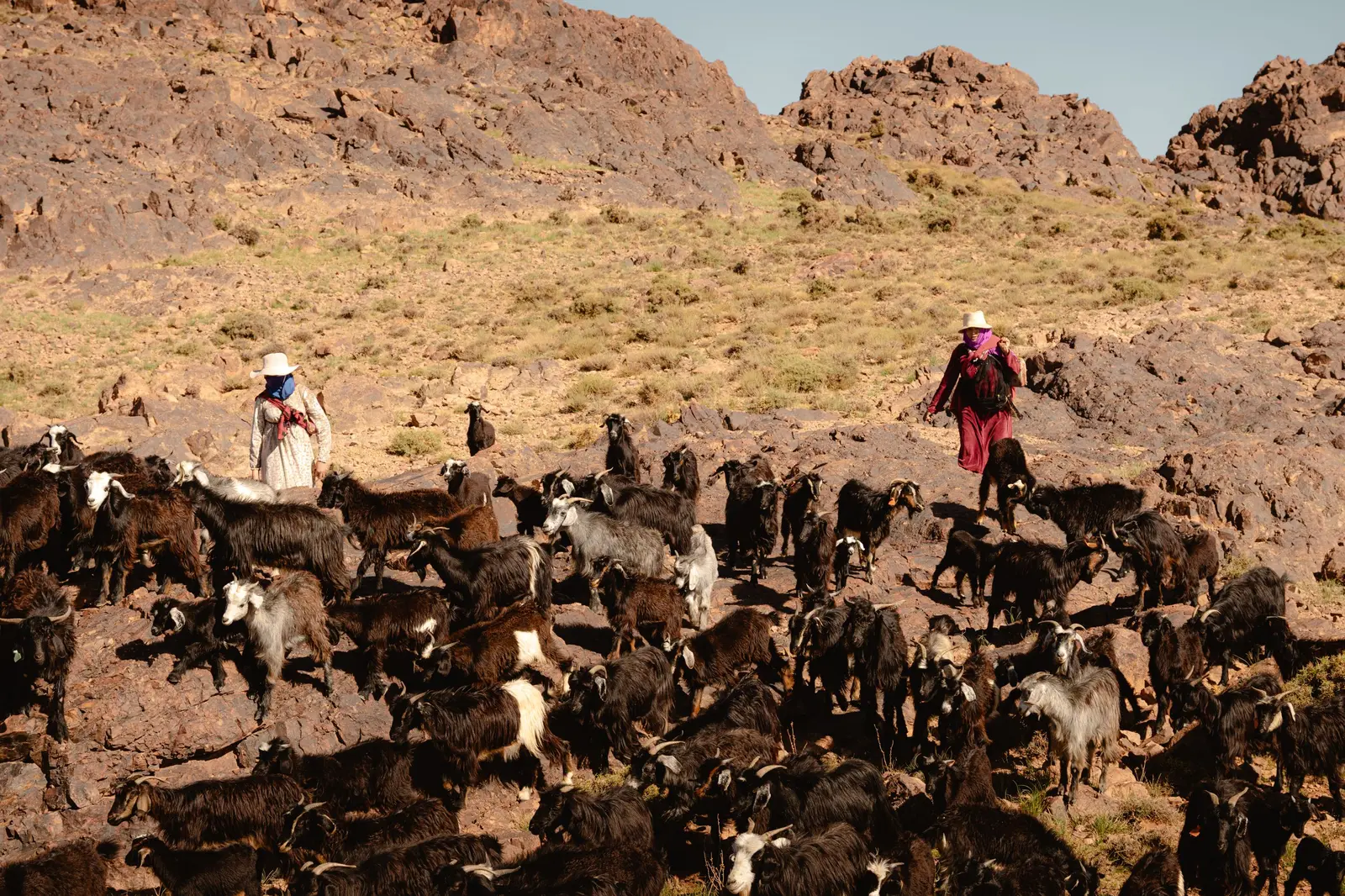
A persistent chorus of disgusting and guttural bleats echoed over the canyons and basalt towers of Jebel Saghro. I look at the sun at noon. In the distance, high on a reddish peak, I see the red djellaba worn by Telhou Belâawane, the matriarch of the Berber family with whom I travel to Morocco. Her presence confirms that the goats are close. We searched again in the rocks and in the rock-breasts of the mountains for our flock. But to my untrained eye, their layers of onyx are frustratingly indistinguishable from the volcanic terrain. Jebel Saghro is the homeland of the ancestors of the Telhou people, the Aït Atta, a powerful historical Berber (or amazig, meaning free people) tribe in southeastern Morocco.
Latest news
 Exploring the Untamed Beauty of Northern Louisiana
 Beyond the Capital: British Tourism Chiefs Target Indian Visitors
 19 Unique Things to Do in Cape May, NJ
 A Local Says to Visit These 29 Farms in Puerto Rico
This rugged region stretches from the high Atlas Mountains to the edge of the Sahara and twice a year serves as the backdrop for one of Africa's oldest migrations. For thousands of years, Aït Atta and other Berber families moved their cattle over 180 miles from the summer pastures of the High Atlas to the winter pastures of Jebel Saghro. This seasonal pastoral journey, known as transhumanism, defines a semi-nomadic lifestyle that quickly disappears. It's late September and Telhou and her husband, Hmad, and her daughter, Saadia, are 10 days away from the trip when I joined them with a support team from tour operator Black Tomato. Walking with a family and their herd is one of five immersive experiences that includes The Keepers, Black Tomato's newest itinerary collection.
Each journey is built around people whose knowledge continues to be practiced and transmitted, from a 28th-generation Daoist master from Chengdu, China, to a marshal on Chile's Chiloé Island who spent a lifetime reading the ocean's waves. A pioneer of off-the-grid luxury, Black Tomato has an instinct to know what discerning travelers will crave. With The Keepers, Black Tomato co-founder Tom Marchant predicts that in a world where almost anything can be searched for or generated in seconds, human knowledge and connection are the ultimate luxury. And more than ever, travelers want to be students, not just spectators. Before my arrival, Belâawane's caravan consisted of 200 goats, two dogs to help herd the goats, two chickens to lay eggs and three donkeys to transport chickens, tea buckets, water taps, blankets and other food and camp supplies.
Reduced in stature, he has an immense personality and a deep pride in his Aït
Black Tomato added five mules and another dozen people — two drivers, four logisticians who helped raise my tent with my bed and toilet, a cook, and five mule handlers whose animals carried all the food, luggage, and extra comforts for my condition. Some have cousins of the Belaawane family and many, such as our mule leader, Zaïd Oukhazaid, have wandered off their nomadic ways for permanent village life for various reasons, including climate change. The day I arrived, Zaïd and another mule met me on the side of the road in Tagdilt, a village on the edge of the Dadès valley. They both wear sheep's wool, coarse, over their trekking pants and plaid shirts and have turban-shaped saddles, known as shesh, mixed upside down on their heads. Zaid makes a wide smile and exposes the space left by the four missing front teeth.
Reduced in stature, he has an immense personality and a deep pride in his Aït Atta legacy. He stretches out a muscular arm and after two strong shakes of the hand, he pulls me into a bear's embrace exclaiming, „Welcome, welcome”, one of the few English phrases he's learned while working with tourists. I also have a rudimentary knowledge of Arabic, French and Berber. Noureddine (Nouri) Bachar joined my translator to interpret and facilitate the conversations, but over the next few days I am surprised to find out how much can be communicated with thank you very much, very well, and laughter and smiles. While the rain was coming, the family started early with the herd and will meet us at camp, Nouri explained. „The nominees dictate the days”, he says. You're here to support her journey and we're here to support yours.
Once the mules are loaded with our luggage, Zaïd invites us to follow him into the Martian landscape that lies ahead. Now I understand why Saghro is known in Berber as the Land of Pain. Before us lies an infinite stretch of table with flat top, dry riverbeds and shady rocks. He seems to be feeling my uncertainty. „Leave me in a city, I'd be lost”, says Zaïd. Leave me anywhere in these mountains, and I know my way.
Content written by Jen Murphy for travel-good.com editorial team, AI-assisted.