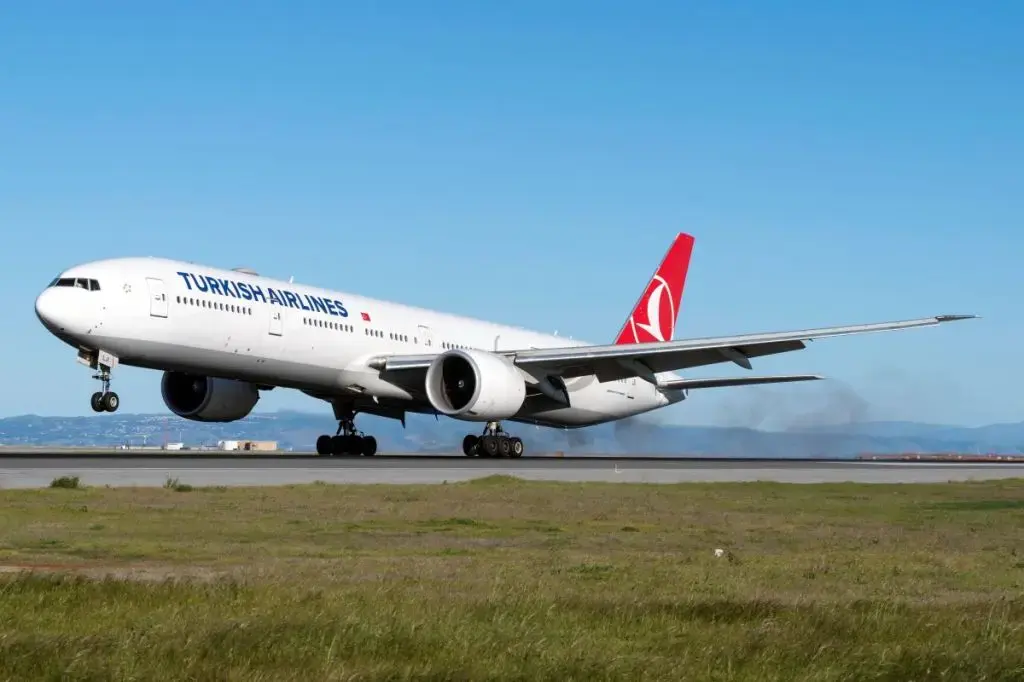
Turkish Airlines Secures Record Boeing Deal
Prioritizing Fuel Efficiency Over Rapid Expansion
Turkish Airlines finalized its largest narrowbody purchase with Boeing, securing an agreement for up to 150 737 MAX aircraft to support future operations. The monumental deal includes 100 firm orders for the 737-8 model, marking a significant milestone for the flag carrier under its newly established leadership team.
Latest news
 Expedia Group Acquires Kiwi.com to Expand European Flight Sales
 Atlas Ocean Voyages Lets Guests Choose Hull Color for New Sailing Yacht
 MSC World Asia Sets Sail as One of the World's Largest Cruise Ships
 American Airlines Issues Travel Alert For Miami Airport Amid FAA Ground Stop Advisory
The historic transaction highlights a strategic shift for the airline as it transitions toward a more measured approach for its upcoming growth phase. Rather than chasing sheer size, executives are prioritizing fuel efficiency and long-term financial returns. Locking in modern aircraft now helps protect the business from volatile energy costs and supply chain constraints.
Will Fleet Modernization Deliver Higher Margins?
A massive aircraft order might appear contradictory to a delayed fleet growth target, but the carrier is playing a careful long-term game. Modern narrowbody jets burn significantly less fuel than older generations, providing a vital cushion against fluctuating oil markets.
Management views this acquisition as a crucial step to stabilize operating margins while maintaining a competitive network. By securing these production slots, the airline guarantees steady modernization without overextending its financial resources in the near term.
Frequently Asked Questions
The success of this strategy hinges on how effectively the carrier integrates the new jets into its existing flight schedules. Fuel savings and reduced maintenance expenses should eventually offset the heavy capital investment required for such a large procurement.
Industry observers will closely monitor whether this disciplined operational framework helps the airline achieve sustainable profitability. If the gamble pays off, the carrier will prove that strategic restraint can outperform aggressive, unmanaged scaling in modern aviation.