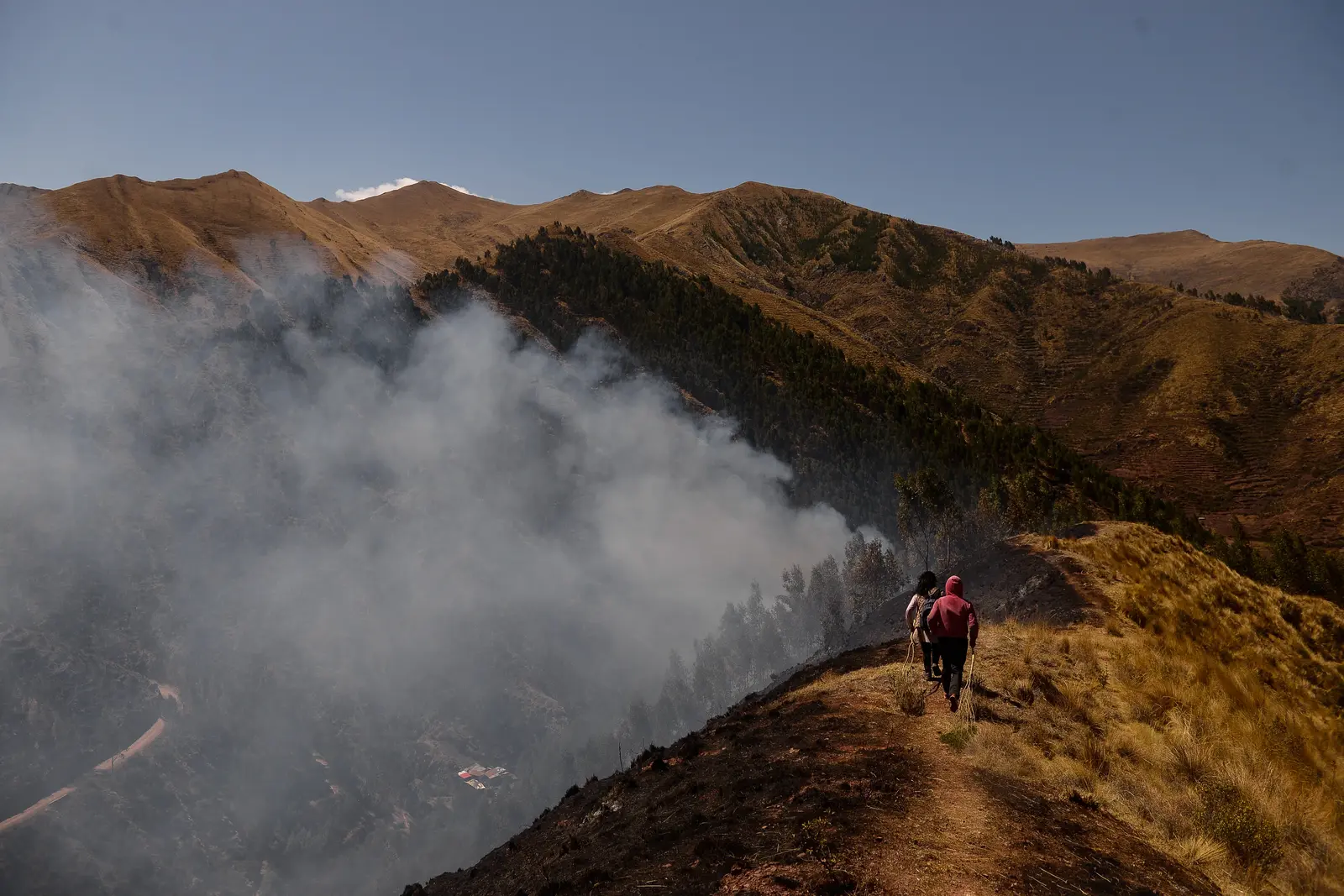
Wildfires Rage Through Peru’s Cusco Region, Prompting Travel Warnings
Smoke Over Sacred Sites: How the Fires Affect Iconic Attractions
The Peruvian highlands are battling a series of wildfires that have ignited across the Cusco region since early October. Smoke plumes have drifted over major tourist hubs, degrading air quality and prompting local authorities to issue health advisories. Travelers heading to iconic sites such as Machu Picchu and the Sacred Valley are being urged to monitor conditions closely and adjust itineraries as needed.
Latest news
 Delta Flight 2531 Forced to Declare Emergency After Passenger Disturbance
 Royal Caribbean Cruise Diverts From Bahamas To Canada Amid Weather Concerns
 Chapel of Expiation: A Silent Witness to France’s Revolution
 Lufthansa to Launch Columbus‑Frankfurt Direct Flights in 2027
The blazes erupted amid an unusually dry season, fueled by strong winds that have carried flames into forested valleys and agricultural fields. Satellite images show fire fronts advancing near the towns of Urubamba, Ollantaytambo, and the outskirts of the historic city of Cusco. Officials attribute the rapid spread to a combination of climate anomalies and delayed containment efforts. Firefighters, equipped with aerial water drops and ground crews, are battling the infernos around the clock, but rugged terrain hampers access. Residents report evacuations in several rural communities, while local hospitals have seen a rise in respiratory complaints linked to the smoky haze.
Machu Picchu, perched high above the Urubamba River, remains open, but park officials warn that visibility can be compromised on particularly hazy days. „We are monitoring air quality levels continuously,” said a spokesperson for the Ministry of Culture. „If particulate matter exceeds safe thresholds, we will limit visitor access to protect health.” The nearby town of Aguas Calientes has experienced a surge in demand for indoor accommodations as travelers seek refuge from the outdoor smoke. Meanwhile, the Inca Trail, a popular multi‑day trek, has seen sections temporarily closed while authorities assess fire risk and ensure the safety of hikers.
Will the Fires Deter Tourism This Season?
Despite the disruptions, tourism officials remain optimistic. Data from the National Institute of Statistics shows that Cusco welcomed over 1.2 million visitors last year, and the region’s economy depends heavily on this influx. „We are coordinating with emergency services to provide real‑time updates to travelers,” explained a representative from the regional tourism board. „Alternative routes and indoor cultural experiences are being promoted to maintain visitor interest.” Some tour operators have shifted focus to lower‑altitude destinations, such as the colonial city of Arequipa, to mitigate the impact of the smoky conditions.
The ongoing wildfires pose a lingering threat to both the environment and the local economy. Prolonged exposure to poor air quality could deter future visitors, while the loss of forest cover may exacerbate erosion and affect water supplies. Authorities are urging the public to limit outdoor activities during peak smoke periods and to follow official advisories. As firefighting efforts continue, the region hopes to restore normalcy before the peak tourist season peaks in December.
Frequently Asked Questions
Is it safe to visit Machu Picchu during the fires? Park officials monitor air quality daily. Visits are allowed unless particulate levels become hazardous, in which case access may be restricted.
What precautions should travelers take in Cusco right now? Carry masks, stay hydrated, and limit strenuous outdoor activities when smoke is dense. Check local advisories before heading out.
Will the fires affect travel plans to other parts of Peru? Most major routes remain open, but some rural roads near fire zones may be closed. Travelers should stay informed about road conditions and consider alternative destinations if needed.
Content written by Jessica Puckett for travel-good.com editorial team, AI-assisted.