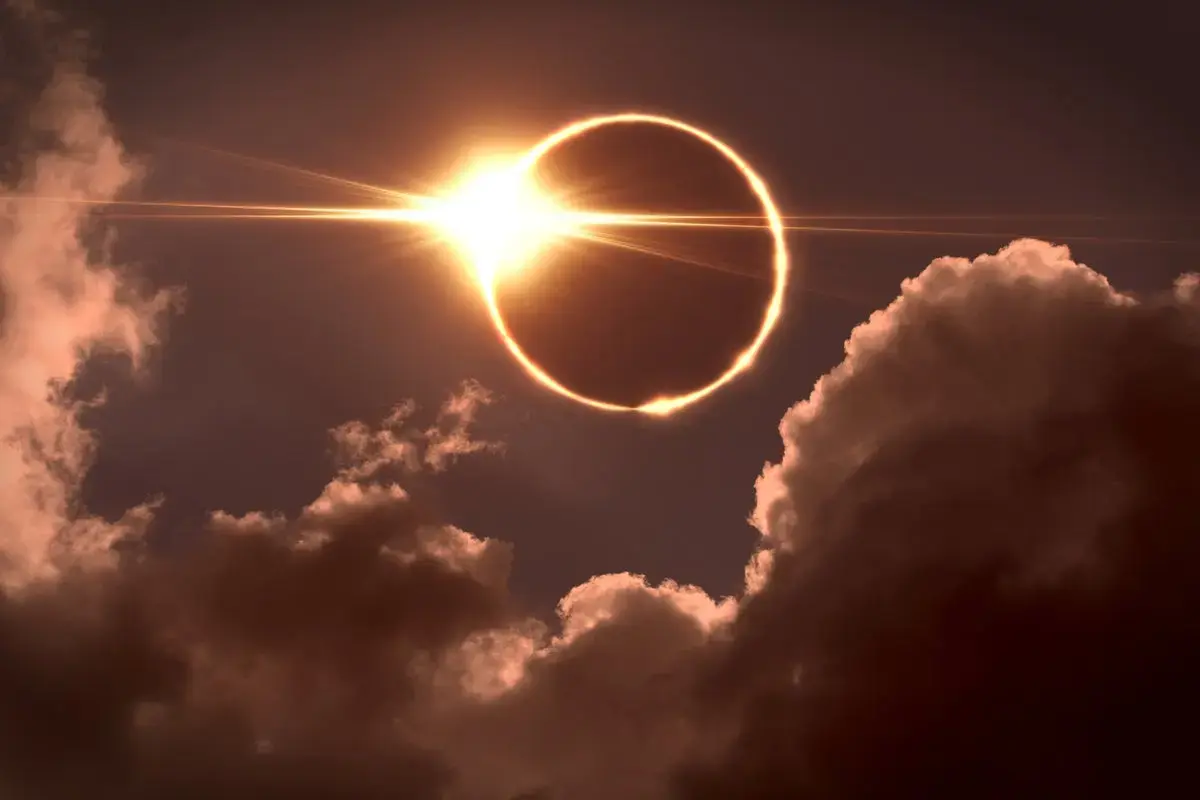
A Rare Celestial Shadow Approaches for the 2026 Solar Eclipse
Navigating the Path of Totality
A total solar eclipse will sweep across the Northern Hemisphere on August 12, 2026. This rare astronomical event will draw the moon directly between the Earth and the sun. The path of totality begins in the Arctic, crosses through Greenland and Iceland, and concludes over northern Spain. Millions of spectators are expected to witness the brief moment of complete darkness.
Latest news
 Delta Flight 2531 Forced to Declare Emergency After Passenger Disturbance
 Royal Caribbean Cruise Diverts From Bahamas To Canada Amid Weather Concerns
 Chapel of Expiation: A Silent Witness to France’s Revolution
 Lufthansa to Launch Columbus‑Frankfurt Direct Flights in 2027
The phenomenon occurs when the moon perfectly obscures the sun’s disk. This alignment casts a deep shadow across a narrow corridor on the planet's surface. While the point of maximum totality happens off the west coast of Iceland, the shadow will traverse several populated regions. Observers within this specific path will experience a sudden drop in temperature and the appearance of the sun’s outer corona.
The trajectory of the eclipse is highly specific, favoring high northern latitudes before dipping into Europe. Iceland serves as a primary viewing hub, though weather conditions remain a critical factor for clear visibility. Meteorologists note that even minor cloud cover can obscure the visual impact of the event. Local authorities are already preparing for an influx of tourists seeking the best vantage points.
Will the Shadow Reach Your Region?
Beyond the Arctic regions, the eclipse will reach parts of Spain just before sunset. This late-day timing offers a unique photographic opportunity for observers. The sun will hang low on the horizon, creating a dramatic backdrop for the transition into darkness. Experts emphasize the necessity of using certified solar viewing glasses to prevent permanent eye damage during the partial phases.
The total phase of the eclipse is confined to a relatively narrow track. Those located outside this path will still witness a partial solar eclipse, where the moon covers only a portion of the sun. The extent of this partial coverage depends entirely on the observer's geographic distance from the center line. Planning ahead is essential for those hoping to secure travel accommodations within the primary zone.
Frequently Asked Questions
The 2026 event serves as a reminder of the precise mechanics governing our solar system. As the moon’s shadow moves at high speeds across the globe, it highlights the interconnected nature of celestial movements. This event remains one of the most anticipated astronomical spectacles of the decade. Clear skies will be the ultimate deciding factor for millions hoping to witness the day turn into night.
What safety precautions are necessary for viewing? You must wear ISO-certified solar eclipse glasses at all times during the partial phases. Looking directly at the sun without protection can cause severe and irreversible eye injuries.
Is the entire world able to see the total eclipse? No, only individuals located within the narrow path of totality will experience the sun being fully obscured. Most of the globe will either see a partial eclipse or nothing at all.
Content written by Marco Ricci for travel-good.com editorial team, AI-assisted.